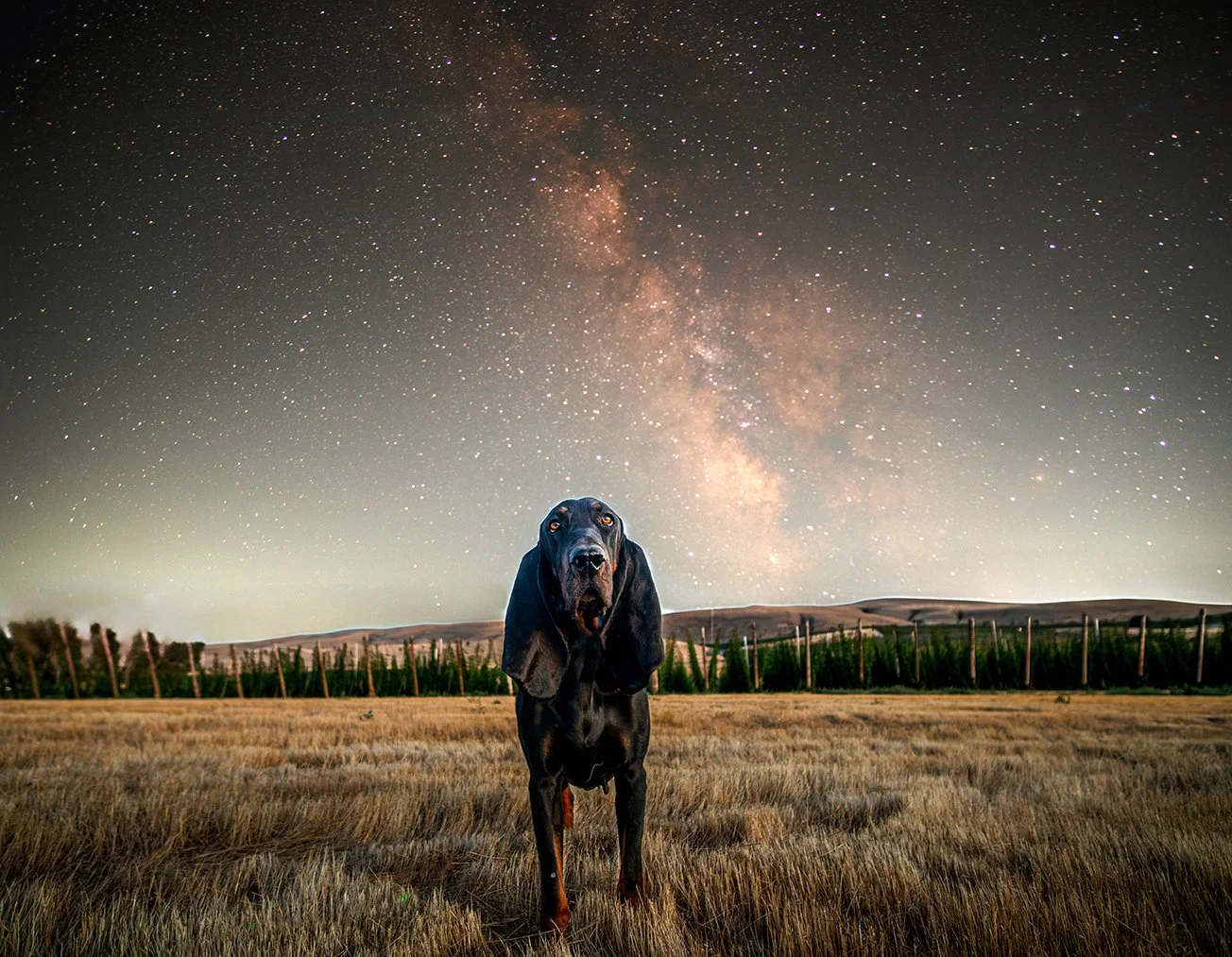
Nightscape photography differs from other genres as well by the necessary planning that needs to happen even before the session. You need a dark sky location, no more than a Bortle 4 to effectively photograph the night sky. The lower the Bortle number the better. The Bortle scale is a measure of light pollution and you would be surprised at what you think of as dark skies actually aren’t dark due to light pollution at night. So your location is very important. If you are photographing the Milky Way do you know where it is? It isn’t a matter of pointing your camera at the sky and getting an image, you have to know where it is. The Milky Way starts out in the Southeast in late February or early March and works its way Southwest through the season, usually ending in late October or early November. What time is it visible? It’s not out all night early or late in the season. As I write this it is becoming visible about 1:30 am which means you want to photograph it you need to get out of bed and get to your location in the middle of the night. Or if you are getting your foreground images from that location and you want to shoot during blue hour where you have light from the sun that’s just gone down, staying at that location until the Milky Way rises to get your images. But never fear, starting in late June, the Milky Way becomes visible just after true dark so you don’t have to wait hours to get time with the Milky Way. Finally, one needs to consider the moon cycle. Getting images of the moon can be great fun but if you're photographing the moon, you aren’t going to be able to photograph the Milky Way. Light from the moon will make the Milky Way invisible. The best time for photographing the Milky Way is right before or after the new moon although it can be done when there is no on in the sky at the time the Milky Way is up. I’ve shot a week after the new moon with success.
In my work, I love to add dogs to my images. Dogs and the night sky are two of my very favorite things, so getting to create this kind of art brings me much joy. There are two ways I do this. First the dogs are photographed during blue hour, usually just after sunset while there is light from the sky but not directly from the sun. Then I will either use the same location and position to photograph the Milky Way when it rises and then combine them or, if for some reason I don’t get good images of the Milky Way, I can combine the dog’s photos with photos taken of the Milky Way at a different time. Photographing the Milky Way is tricky, even under ideal conditions I might not get the images I want of the Milky Way. Weather, haze, and smoke are things that could preclude getting good sky images, so I have a fall back position to where I can still create the art, but it may be from images taken at different times and even different places.
This season I am planning on photographing at several different locations this summer. Some of those include Battle Point Park on Bainbridge Island, Lyons Ferry State Park on the Palouse and Brooks Memorial Park at Goldendale. If you are interested in joining me send me an email dianedavis@dianeedavis.com at or book a consult call with me and let’s go make one of a kind artwork that celebrates YOUR dog!