8/4/24
Pups Under The Stars!
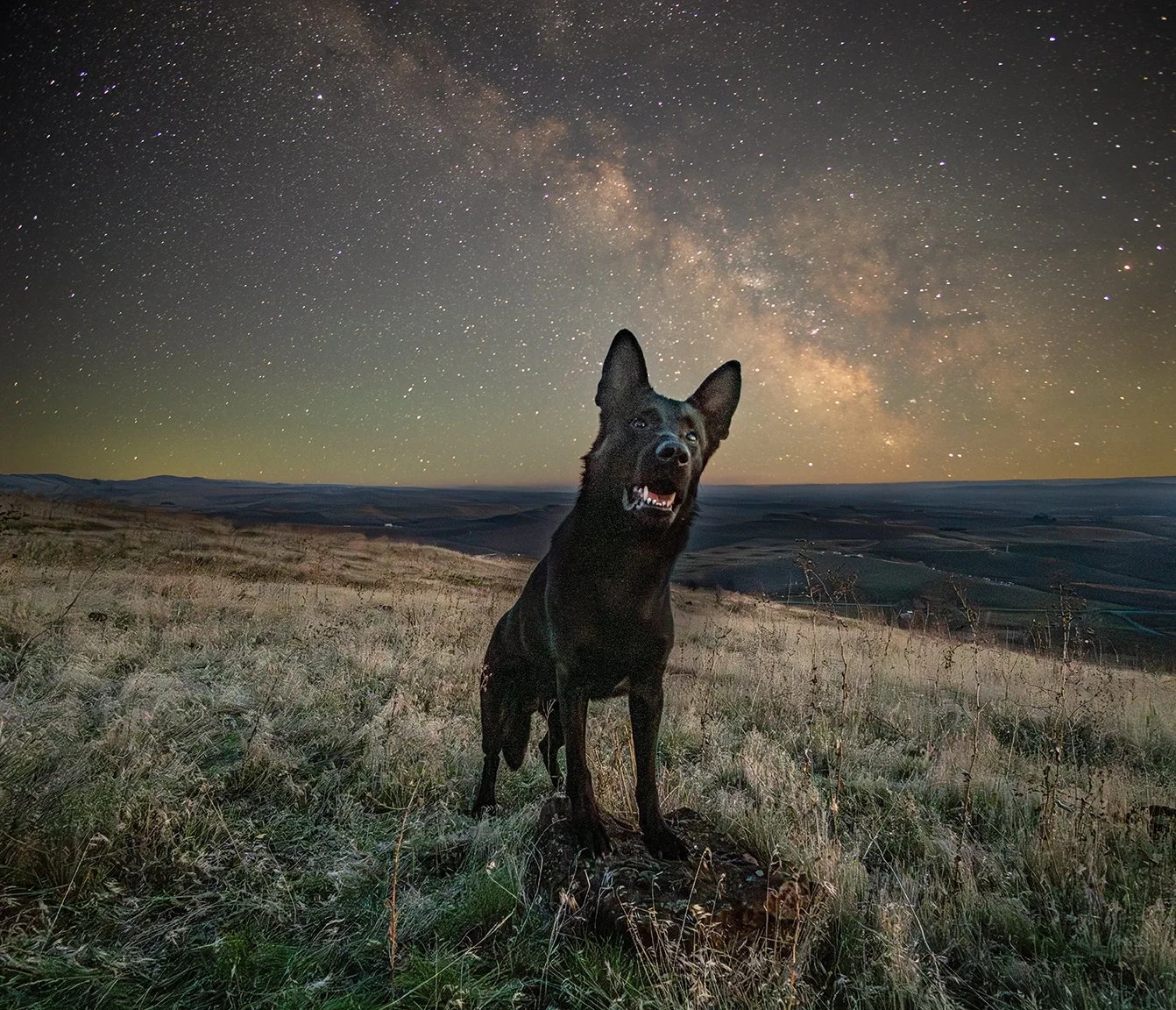
A little over a year ago, I discovered Milky Way Photography. As someone who has always loved looking up at the night sky, this was a complete revelation for me. How amazing to be able to take photos of something that you can’t really see, and combine it with the landscape to create something so utterly beautiful. So I enrolled in Kristine Rose Photography’s Night Academy and started the journey to learn about how to create these images. While this journey is a constant learning process, I have reached the point where I am combining pets and the Milky Way and I want to share it with you.
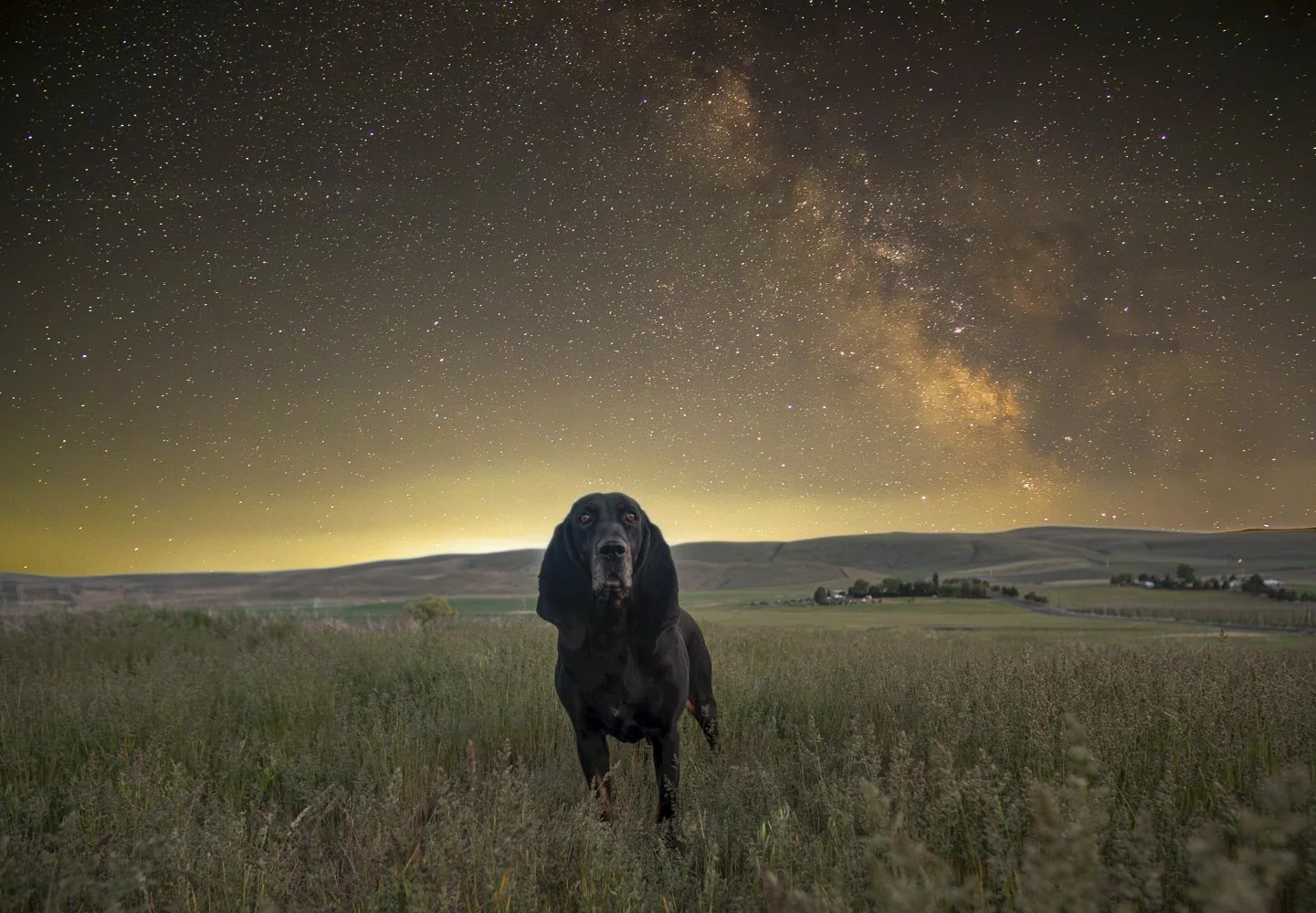
Did you know there is an actual Milky Way season? Typically from early March to late October in the Northern Hemisphere is when you can see the Milky Way Core in the night sky. Even though the Milky Way is always present our planet is on its outer edge so our ability to see the core is dependent on the time of year it is. There is also a time of the month that the Milky Way is visible. During the New Moon cycle is the best time for taking Milky Way photos as light from the moon will illuminate the sky and you will get nothing on your photos. During the New Moon cycle, there is little or no moon, so the night sky will be more visible and if you are in a good location, you can see the Milky Way with the naked eye.
Light pollution also plays a big role in Milky Way photography. The less light the better. The Bortle Scale gives you the amount of light pollution in a certain area. A Bortle 1-2 (truly dark skies) is best for photographing the Milky Way, but I find I’m shooting at a Bortle 3-4 for the most part, and you can set camera settings to compensate to some extent. If you are in a location that is more than a Bortle 4 it becomes very challenging to get good photos.
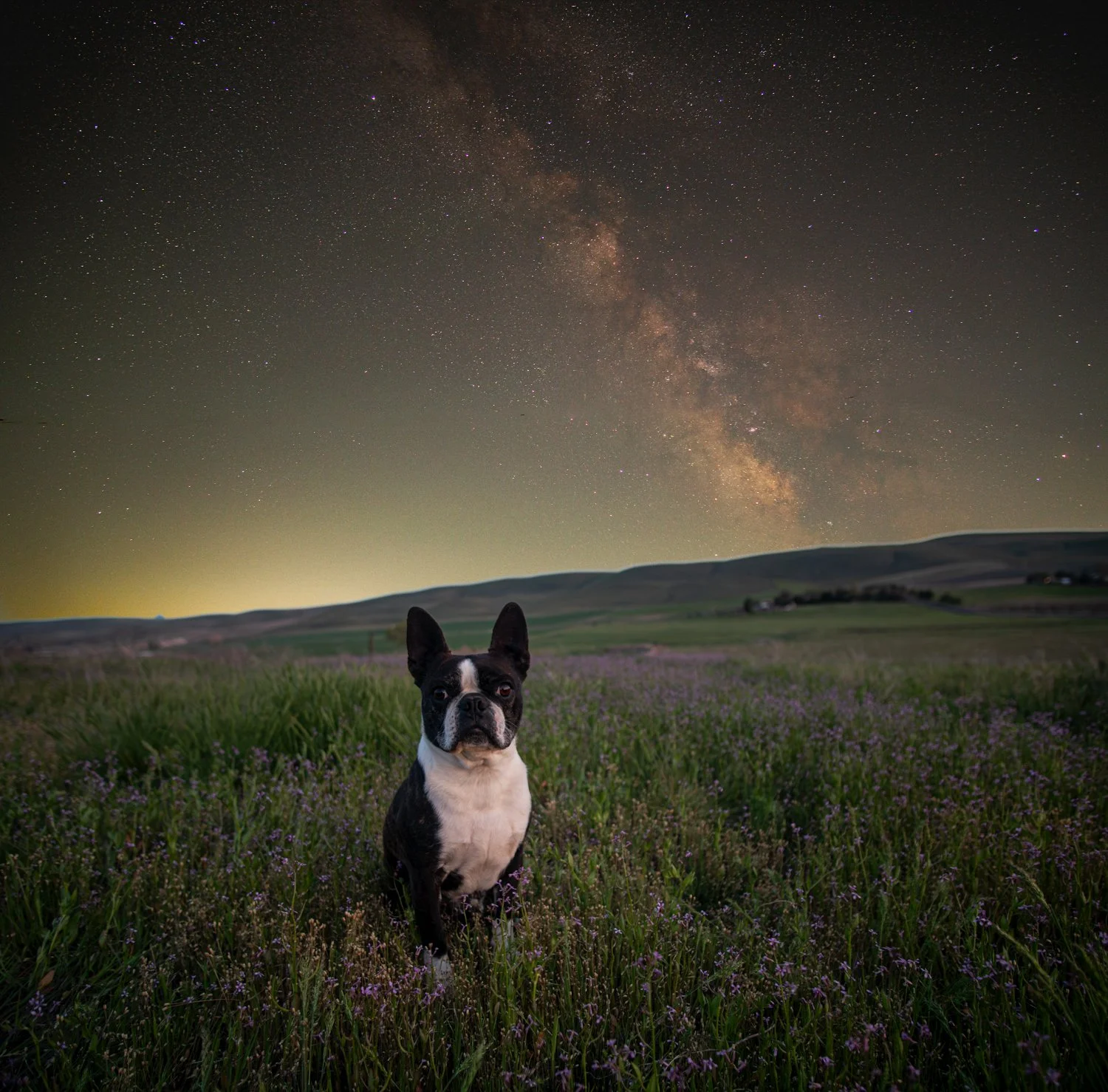
Where do the dogs come in? Well that’s how the magic happens. The dogs are photographed separately, during what is called Blue Hour, just after Sunset, so there is enough light to photograph the dog, but not so much light that it looks unrealistic. Then the Milky Way is photographed from the same position once it becomes full dark and the images are blended together in post processing. The images you see here are of my personal dogs, taken at Blue Hour, then blended with an image taken later, but from the same spot. Some would call them composites, I call them super freaking cool!
If you want an awesome experience, and love your dog and the night sky, I can help you to create images like these. There is still time this year to get beautiful, one of a kind artwork of your dog and the night sky. Feel free to reach out to me, with any questions regarding this type of session and let’s make some magic happen!